Faces of the city,
at the scale of the city.
Jorge Rodríguez-Gerada turns walls, streets and open land into portraits of the people who live there. He is recognized internationally for large-scale work in urban spaces, sometimes so large it can be photographed by satellites, using citizens as his models. Our mural practice is built on his approach.
Reclaim public space for the public.
Born in Cuba and raised in the United States, Jorge was a founding member of New York's Culture Jamming movement in the early '90s. The group altered billboard campaigns and brand logos to create social commentary, responding in part to the disproportionate advertising aimed at minority neighborhoods.
That instinct still drives the work: reclaim public space for the public.
Advertising's tools, turned toward the people who live there.
After moving to Barcelona in 2002, Jorge began his Identity Series, which borrows advertising's tools (placement and scale) to elevate anonymous local residents into public icons. Every project starts with a search for the city, the building and, above all, the subject: a person with a real sense of belonging to the place.
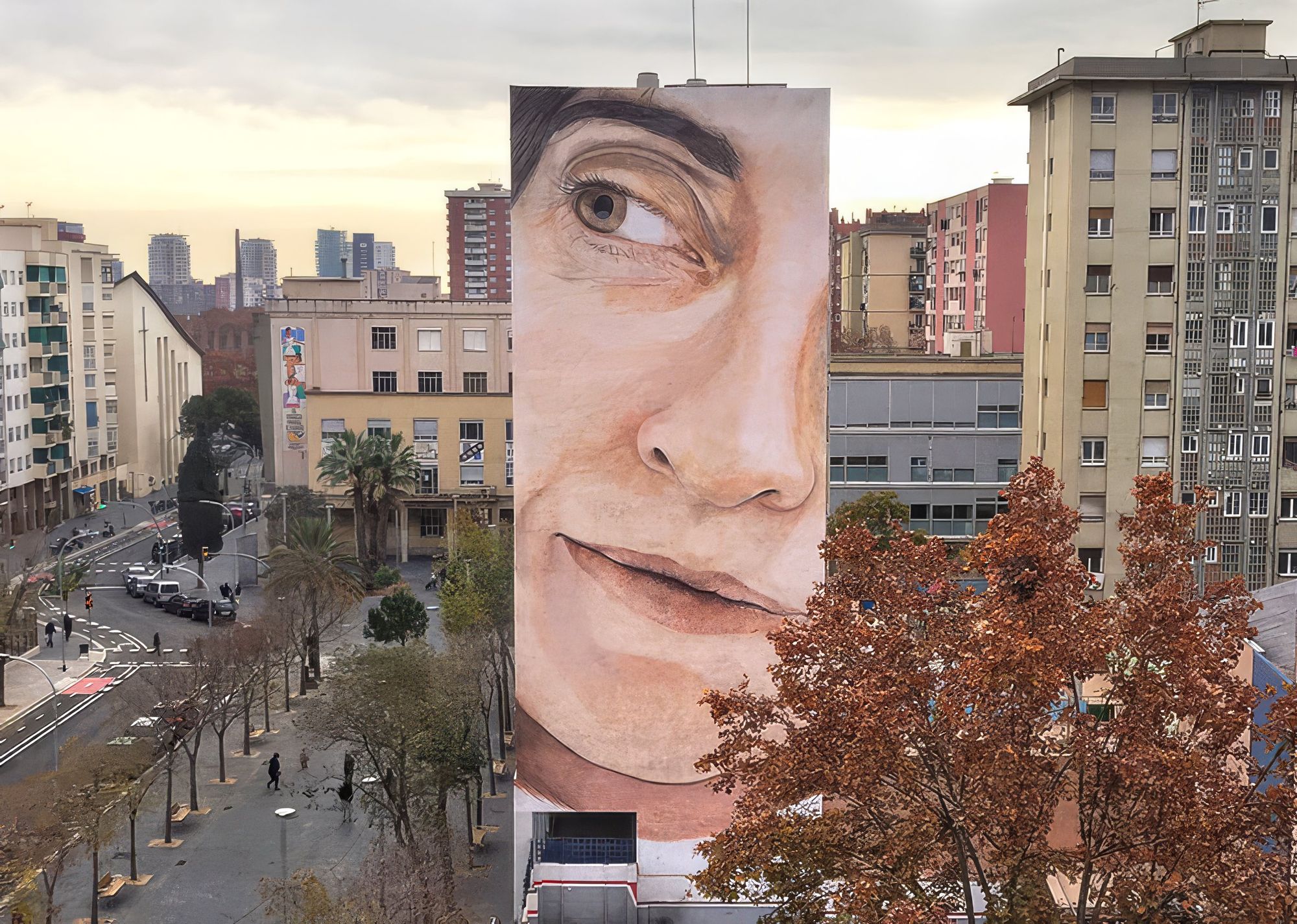
Many works blend several people into one face. Panorama, a 28-meter portrait on a civic center façade in Barcelona's Sant Martí district, combines features of 10 local women to represent the whole neighborhood.
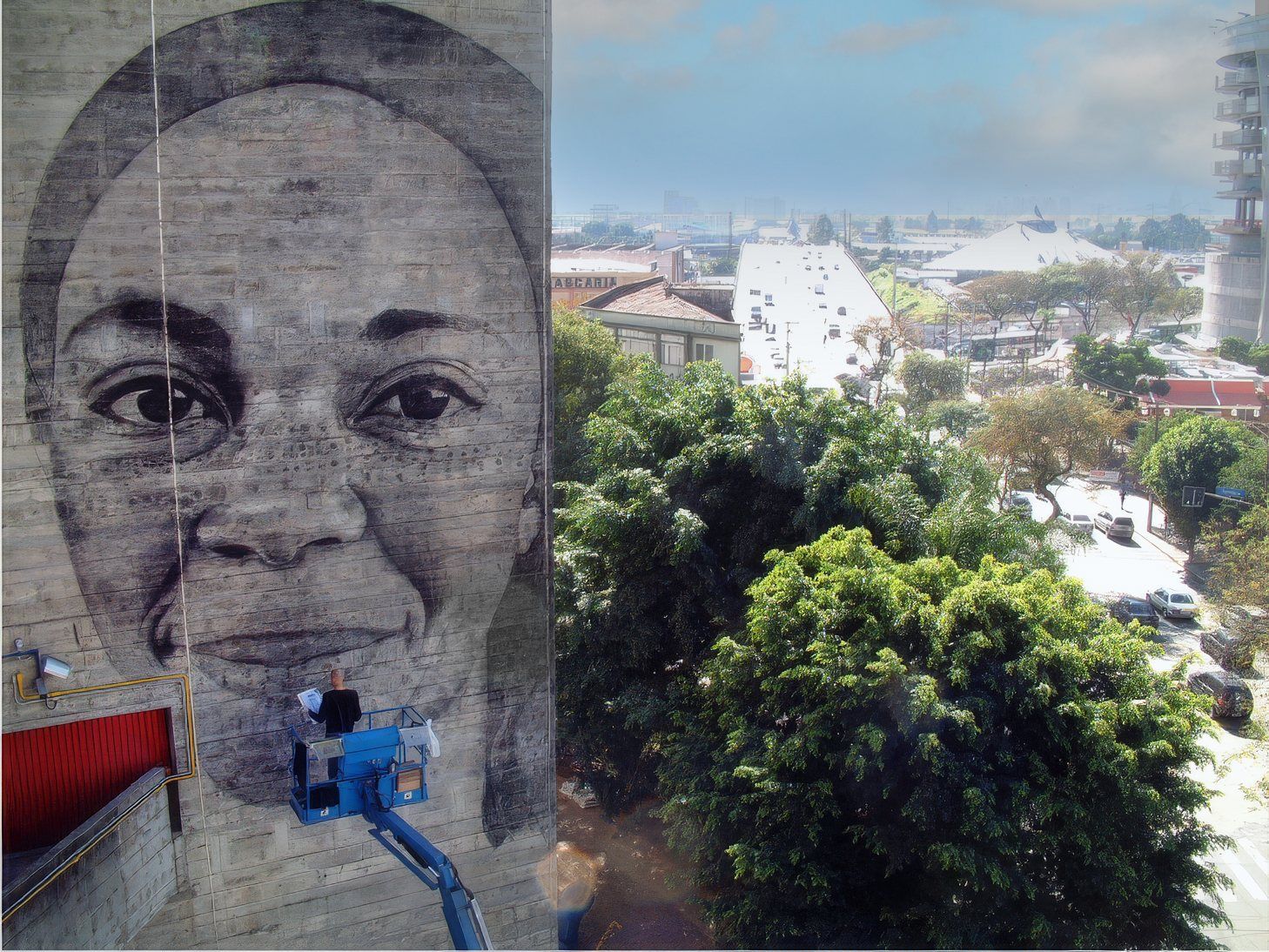
Jorge often works in charcoal for its transparency and impermanence, letting the texture and history of the surface remain part of the image. He has explained he didn't want to impose his images permanently, and wanted them to fade cleanly without waste or environmental harm.
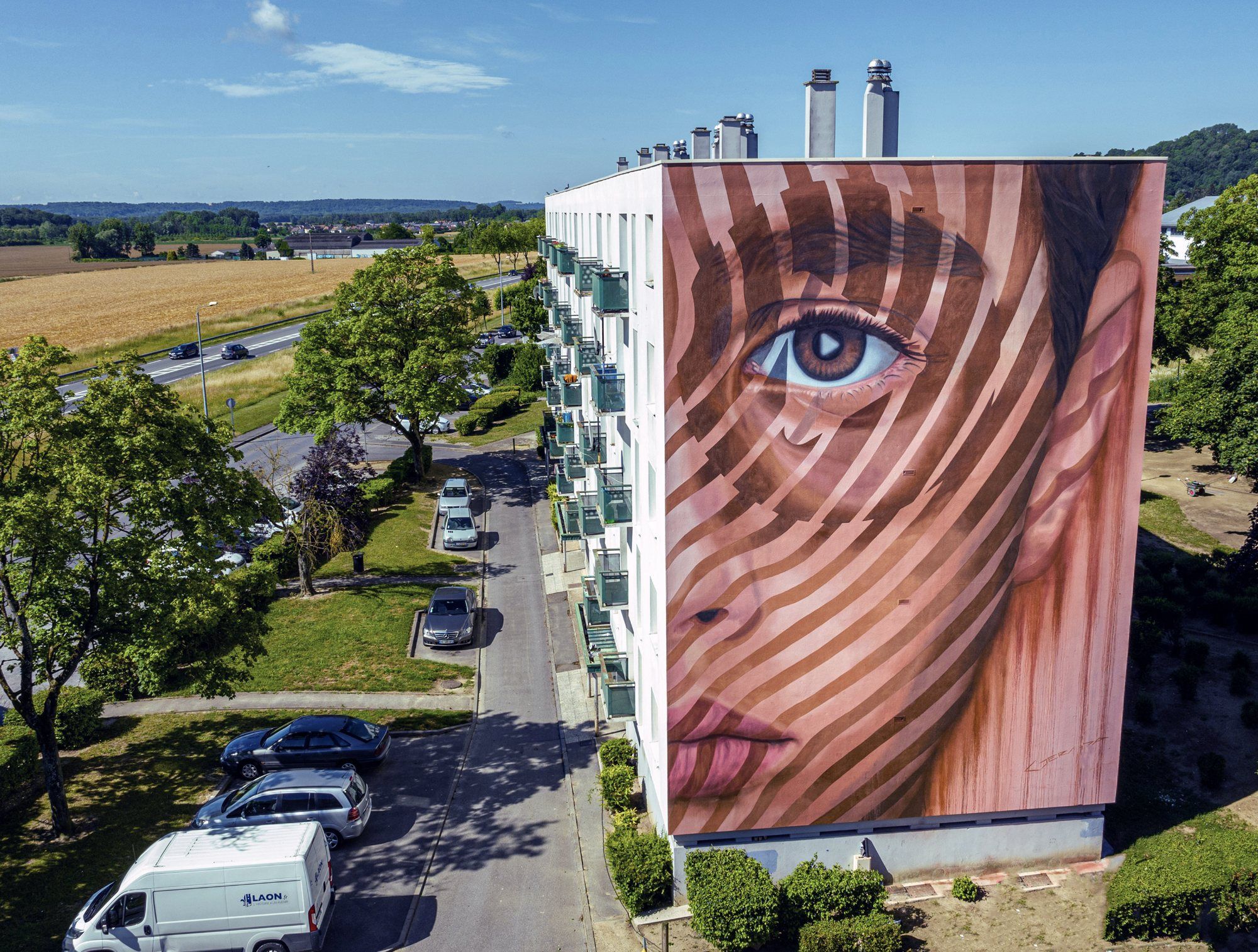
Panorama was painted rather than drawn, so it would remain a lasting part of the neighborhood. Recent painted murals take on contemporary themes. Outsight in Laon, France depicts a boy whose iris is replaced by a "play" symbol, questioning what it means for children to see the world through screens.
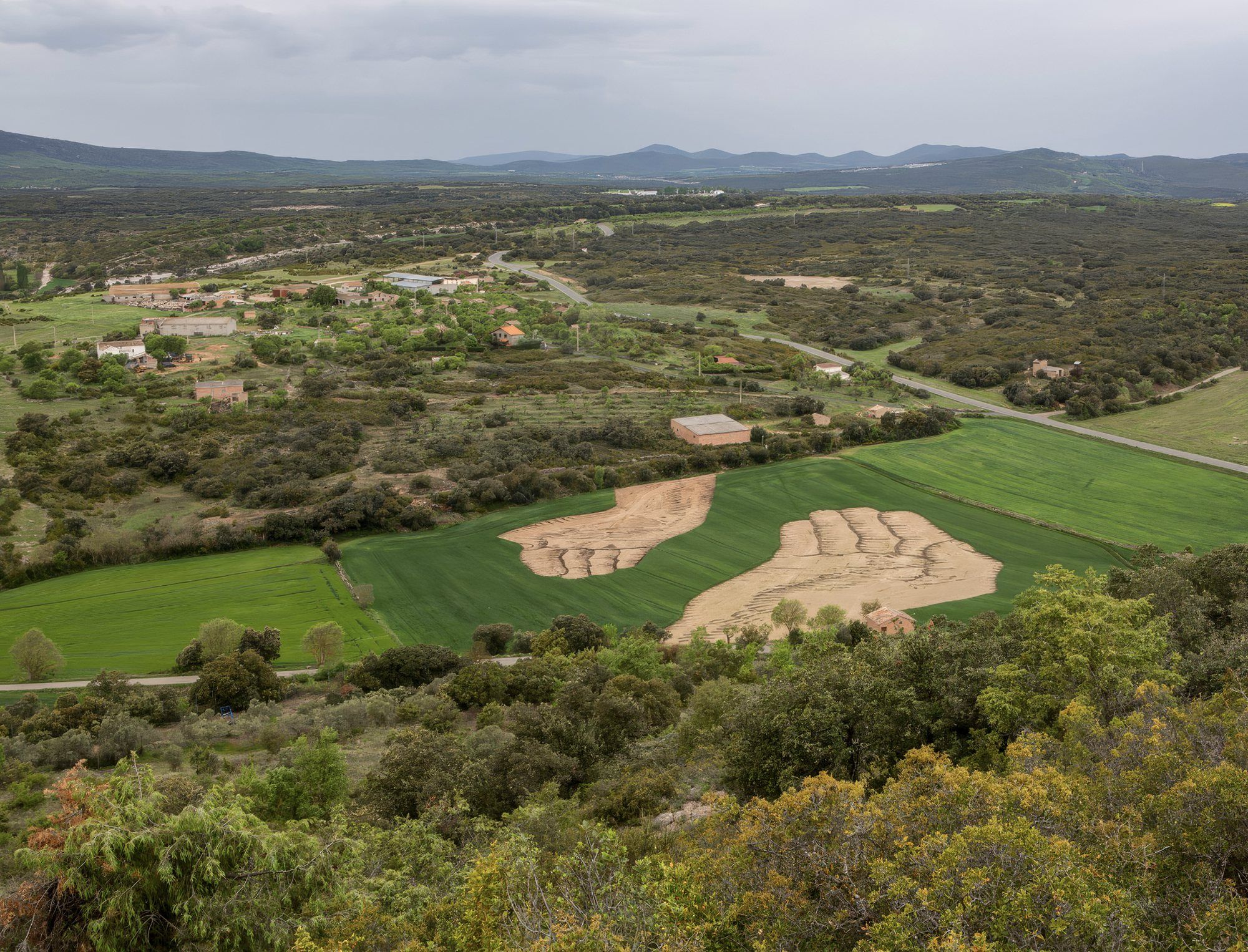
The same portrait language works at the scale of land.
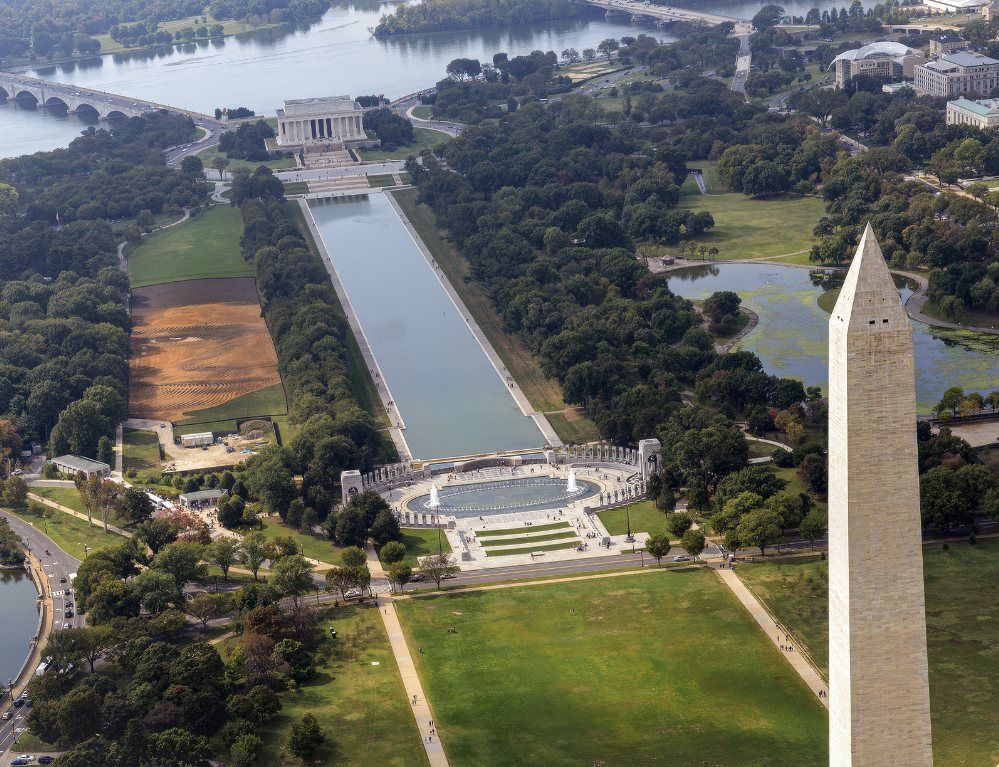
Out of Many, One
Commissioned by the Smithsonian's National Portrait Gallery, this six-acre portrait sat between the World War II and Lincoln memorials. It was a composite of people photographed in D.C., viewable from the Washington Monument and from space. The team used GPS to place 10,000 survey points and laid the image in 2,500 tons of sand and 800 tons of topsoil, all donated.
Wish
An 11-acre portrait of an anonymous local girl making a wish, built with 30,000 wooden stakes, 2,000 tonnes of soil and 2,000 tonnes of sand, and completed in four weeks with local volunteers and community groups.
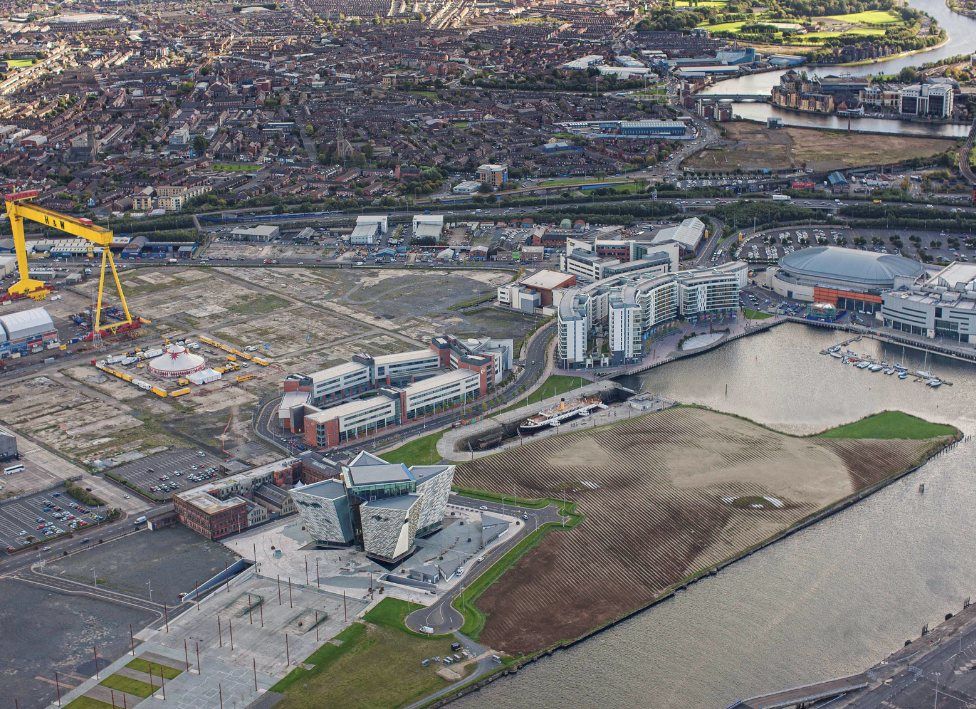
"The size of the piece is intrinsic to the value of its message."
Collaborators and coverage
Four steps, one accountable team.
We study the building, sightlines and community.
We photograph local people, either one individual or a composite.
We define scale, viewing distances and medium: permanent paint or ephemeral charcoal.
We handle fabrication, permitting coordination and installation.